Showing posts with label AM. Show all posts
EGGS-actly What You Need To Build Muscle!

EGGS-actly What You Need To Build Muscle!
Eggs have been vilified for years as the poster child for artery clogging foods; but further research into the role of dietary cholesterol and heart disease shows that for most people the two are not linked.Eggs have since returned to the spotlight as a health food; but they are also a serious muscle building food.
The cholesterol found in the yolk of eggs serves at the scaffolding for steroid hormones and the ½ a gram of leucine per egg is like throwing gasoline on your muscle building fire.
Top 5 Best Bicep Exercises

Build Big Biceps or Sculpt Lean Arms by incorporating these Arm Exercises in your Workout Routines!
Welcome to our Best Bicep Exercises list!
5. Zottman Bicep Curl: The Zottman Bicep Curl is one of two isolation exercises that made our list of best bicep exercises. This variation of the Dumbbell Bicep Curl is a great bicep exercise that uses dumbbells and a twisting motion to effectively work your biceps and forearms.
At the top of the exercise in the contracted position, you twist your wrists to a pronated (palms facing down) grip. With this grip, you’ll then lower the weight to the starting position and repeat.
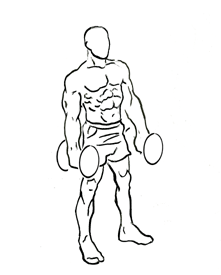
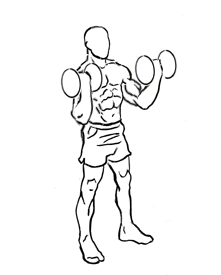
4. Barbell Bicep Curl: The Barbell Bicep Curl is the second of two isolation bicep exercises that made our list. This classic bicep exercise allows you to pile on weight and use all the muscles of the biceps and forearms to curl the weight to the top. No other bicep exercise gives you a pump quite like the Barbell Bicep Curl.
Make sure you don’t swing your hips or back during this bicep exercise. Also, be sure to concentrate on your biceps contracting throughout the lift and keep your elbows in a fixed position.
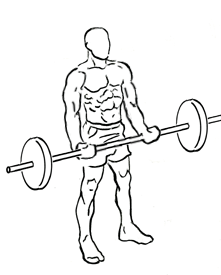
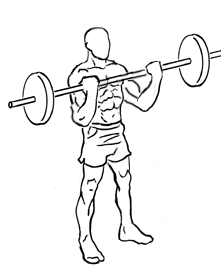
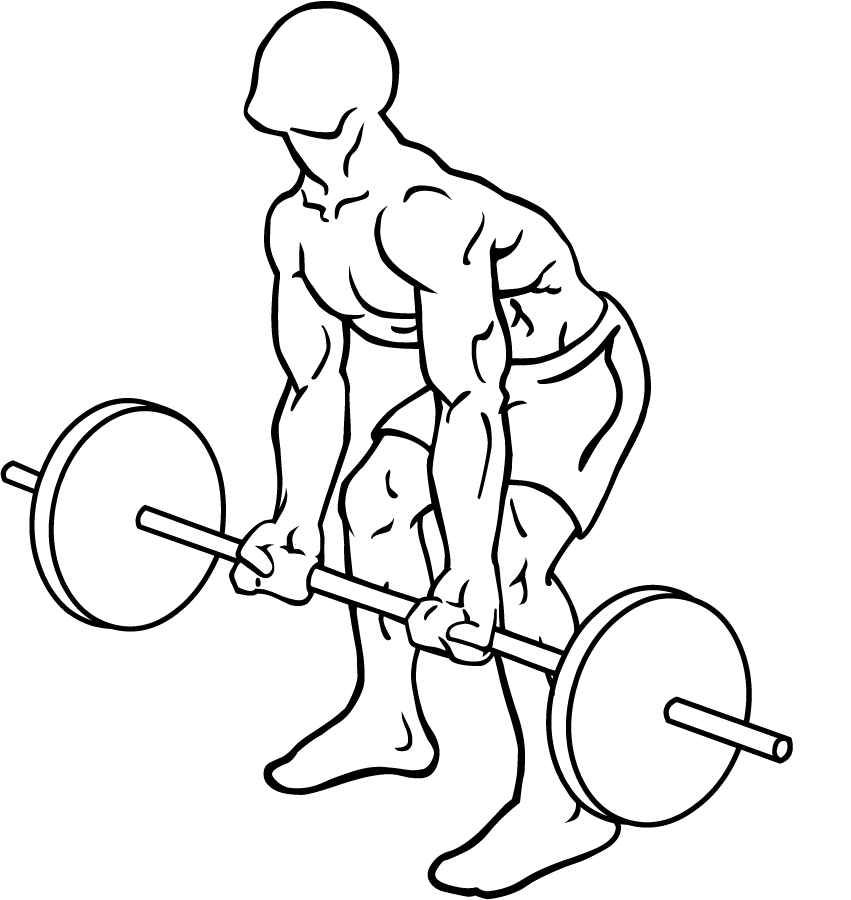
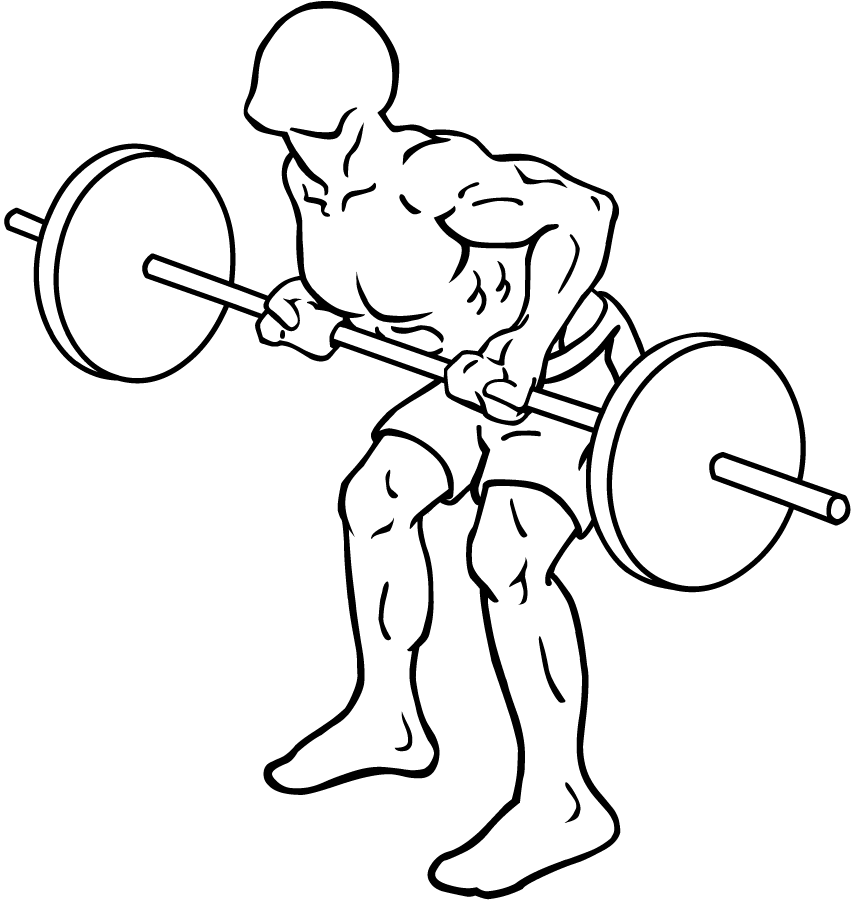
3. Reverse Grip Bent Over Row: We admit, it may be stretching it (even more than our two best bicep exercises shown next) to say that theReverse Grip Bent Over Row is primarily a bicep exercise as this exercise also targets the upper back and lats. However, this bicep/back exercise is one of the best Compound Exercises for building bigger biceps.
The best thing about this version of the bent over row is that you can pack on much more weight than you can with a typical bicep curl and by using a supinated (palms facing up/away) grip, you’ll keep tension on your biceps. Concentrate on your biceps throughout the exercise to further enhance the lift.
2. Narrow Parallel Grip Chin Ups: Now we get to the absolute must have, best bicep exercises. These bicep exercises should be included in most all Fat Loss Workouts and Muscle Building Workouts. Coming in at number two on the list is Narrow Parallel Grip Chin Ups.
This standard Chin Ups variation of is one of the best Compound Exercisesfor sculpting or strengthening your biceps as well as your back. You can do the exercise on a pull up bar that has additional handles facing each other or using a V-Bar as pictured. For additional resistance, hold a dumbbell between your feet or attach a weight plate to a dipping belt.
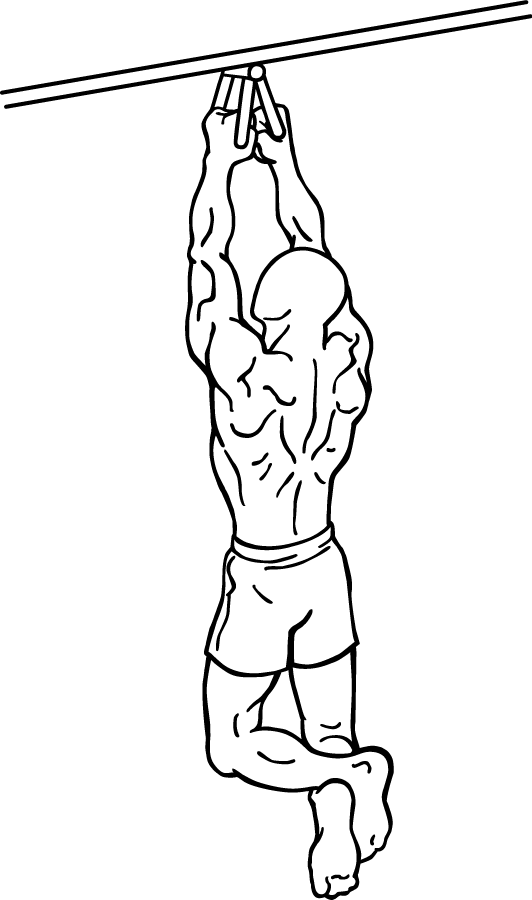
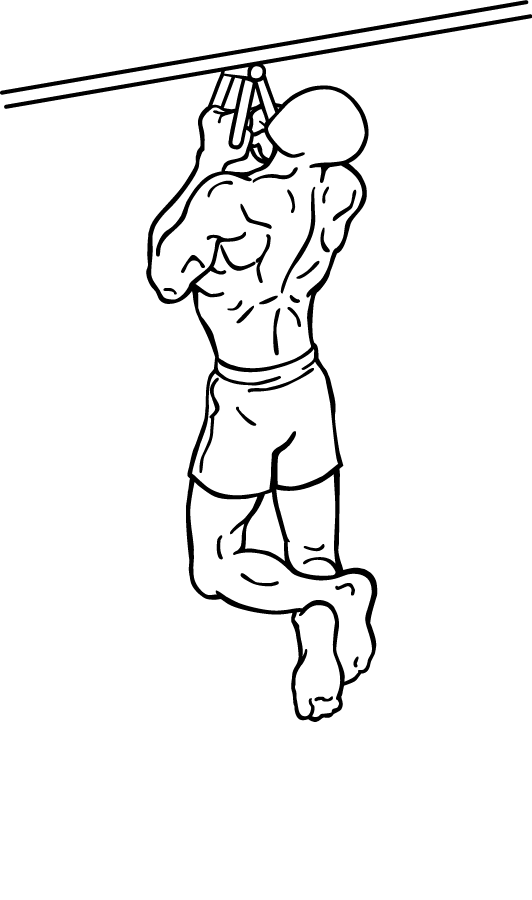
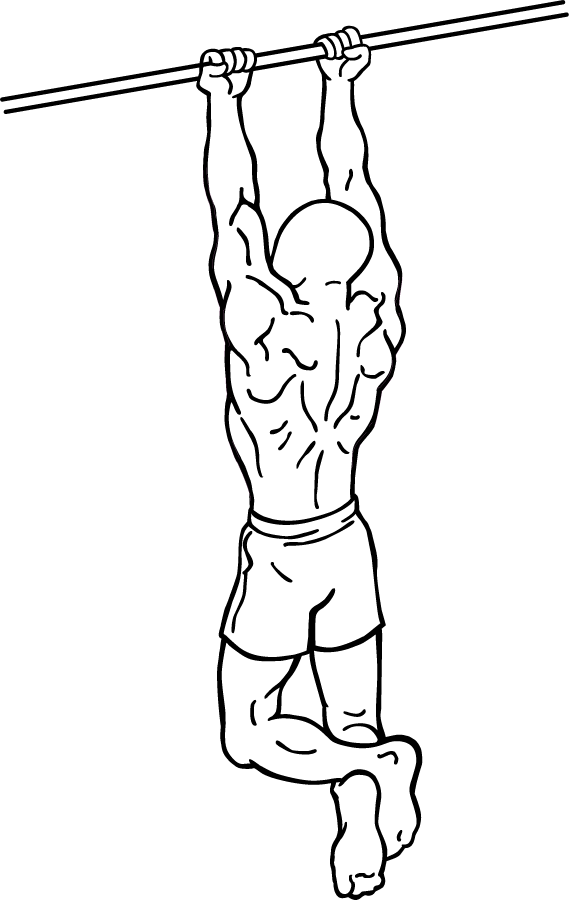
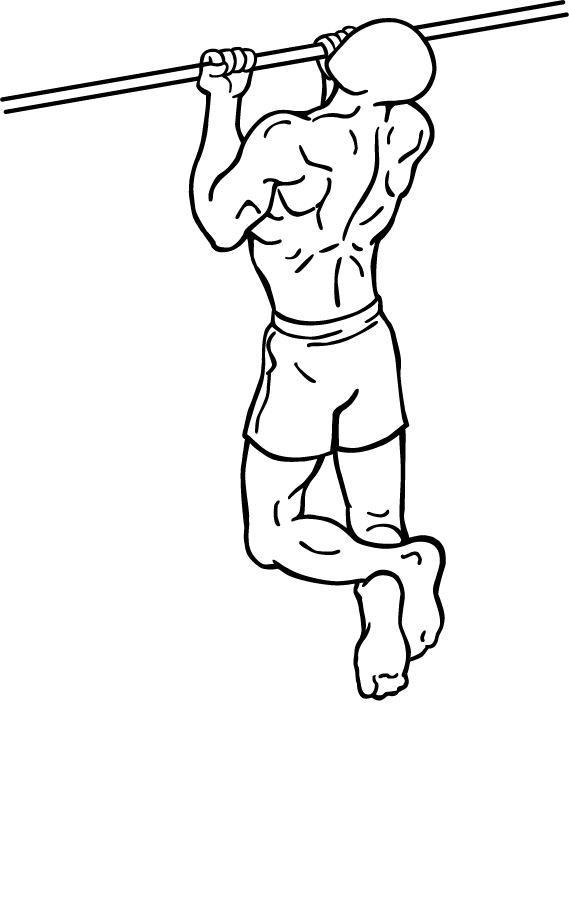
1. Chin Ups: Chin Ups are one of the most basic and best weight training exercises for building Strength in the Biceps and Back. Like Narrow Parallel Grip Chin Ups explained above, Chin Ups also use gravity to force you to lift the weight of your body, which is much more beneficial than using a 25-50 pound dumbbell to isolate the biceps like most bicep exercises.
Like Narrow Parallel Grip Chin Ups, Chin Ups are an absolute must have and should be included in most all Fat Loss Workouts and Muscle Building Workouts. “Chins” are the only compound exercise that primarily targets the biceps.
For additional resistance, hold a dumbbell between your feet or attach a weight plate to a dipping belt.
Well, there you have it: all of the best bicep exercises for gaining muscle mass and losing body fat!
Top 5 Best Tricep Exercises

Welcome to our Best Tricep Exercise list!
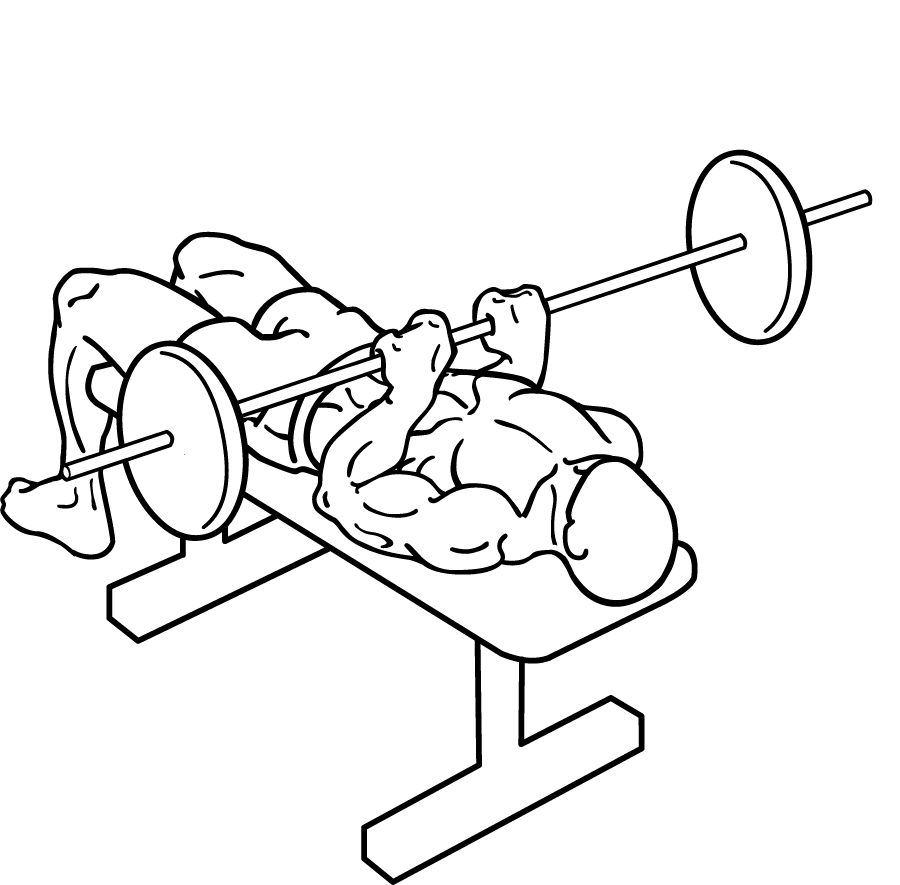
5. Skull Crushers (AKA French Press, AKA Lying Triceps Extensions): There are dozens of Triceps Extensions variations, but none of them are as beneficial as Skull Crushers. With Skull Crushers, you can work up to a fairly heavy amount of weight using a barbell or an EZ Curl bar and can isolate the triceps more effectively than with most other isolation tricep exercises.
5. Skull Crushers (AKA French Press, AKA Lying Triceps Extensions): There are dozens of Triceps Extensions variations, but none of them are as beneficial as Skull Crushers. With Skull Crushers, you can work up to a fairly heavy amount of weight using a barbell or an EZ Curl bar and can isolate the triceps more effectively than with most other isolation tricep exercises.
Tips: Make sure to concentrate on moving the weight with your triceps and keep your elbows in a fixed position throughout the exercise.

4. Tricep Pushups: Tricep Pushups or Diamond Pushups are a great exercise that works your triceps as well as your pecs and deltoids. Pressing off of the ground explosively and clapping at the top of the exercise or adding resistance with a weight plate on your back help you build power and increase your bench press.
Tips: Make sure to keep your elbows in close to your torso throughout the exercise.


3. JM Press: This tricep exercise is somewhat of a cross between Skull Crushers and the Close Grip Bench Press. The JM Press is a must for increasing your bench press and sculpting or building big arms as it allows you to pack on a ton of weight and hits your triceps with a different motion than most other Tricep Exercises.
How to Perform this Tricep Exercise: Like Skull Crushers and the Close Grip Bench Press, during the JM Press you’ll be using a barbell on a bench. As you lower the weight, your elbows should travel forward so that at the bottom of the exercise they are forward of the wrists as they are during Skull Crushers. At the bottom of the exercise you’ll pause for a moment then push the bar in a vertical path to return to the starting position.
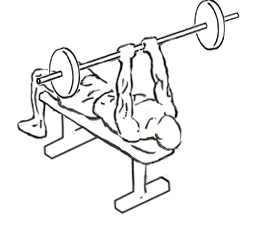
2. Tricep Dips: Tricep Dips are one of the classic Compound Exercises that primarily targets your triceps. Not only that, Tricep Dips also hit your deltoids, lats, and upper back and are a complete upper body blaster.
During Tricep Dips you’ll be pressing at least your body weight, which is much more beneficial than any triceps extensions or tricep kickbacks, which only utilize a light dumbbell.
Tips: Hold a dumbbell between your feet or a weight plate on a dipping belt for additional resistance.
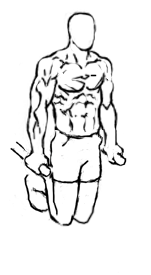

1 Close Grip Bench Press: Here it is, the King of All Tricep Exercises, the Best Tricep Exercise the Close Grip Bench Press. The Close Grip Bench Press allows you to much more weight than any other tricep exercise, aside from maybe #2, Tricep Dips. Doing so will put maximum stress on the triceps and secondarily work your chest and deltoids. Also like Tricep Dips, this Tricep Exercise is also a compound exercise that targets not only your triceps but also your chest and deltoids.
Tips: Set up like normal bench press grip the bar with a narrow (about 6 inches apart) grip. During the exercise make sure to keep your elbows in close to your sides.
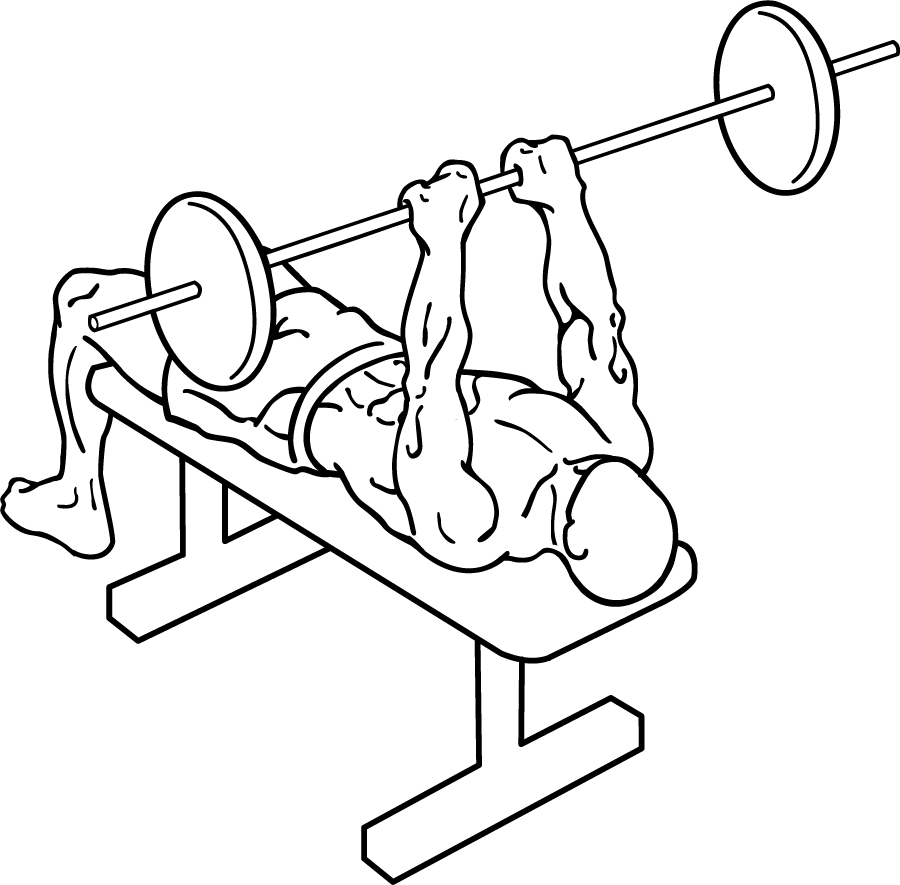
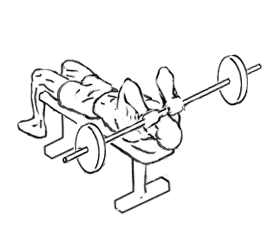
Well, there you have it: all of the best tricep exercises for gaining muscle mass and losing body fat!
Top 5 Best Ab Exercises

There are hundreds of ab exercises that you could do without any equipment, anytime, anywhere. Throw in an exercise ball, medicine ball, dumbbells, barbells, a pull-up bar and all the other gym equipment and the possibilities are nearly endless. Based on sheer volume, picking out the best ab exercises can seem like trying to take a drink from a fire hose.
To make matters worse, six pack seekers have to tone out all of the clever marketing of wonder pills and the newest fads in ab training and exercise products, which always seem to guarantee six pack results. Remember the As Seen on TV Ab Belt? Give me a break.
Lucky for you, we’ve crunched the list down to the five best ab exercises to to bring you the skinny on ab training. Our list of the best ab exercises was built assuming you have a gym membership, but each exercise or a slight variation can be performed with minimal equipment.
Not worried about how to lose fat? If you’ve already dialed in the diet, cranked up the cardio, and abandoned the bulging belly for a flat stomach, congratulations. You’re in the right spot.
If you’re one of those lucky people that can eat whatever they want, never pick up a weight, and never have to worry about how to lose belly fat, you’re also in the right spot, but none of us like you.
And now, on to the best ab exercises…
5. Hanging Leg Hip Raise: The hanging leg hip raise is our first of the best ab exercises and is a more effective variation to its popular cousin, the hanging leg raise. This belly buster forces your abs to statically contract as you bring your knees parallel to your waist (the hanging leg raise portion of the lift) and dynamically contract as you complete the exercise by further bringing your knees in to your chest. Throughout the exercise, your forced to stabilize your core as your body weight and hanging legs serve as a natural source of resistance.
To do the ab exercise, grab a pull-up bar and allow your body to hang straight down with your legs dangling below. Next, bring your knees up to waist height by flexing your hips, pause for a moment, then bring your knees in to your chest by flexing at the waist, pause again, then slowly return to the starting position.
Make the leg hip raise easier by doing the exercise on a captain’s chair (pictured right), an incline, or on a flat surface.
Make the leg hip raise more difficult by holding a light dumbbell between your feet. Remember however that added resistance is a poor substitute for correct form.

4. Incline Oblique Crunches: Like the hanging leg hip raise, our second of the best ab exercises uses your body weight to add resistance to an already effective abdominal exercise. The incline oblique crunch keeps tension on your abs throughout the lift with two types of muscle contraction. When you lift your torso, the abs are shortening; whereas in the trunk lowering phase, your abs are lengthening. The incline of the bench makes these muscle contractions more intense than crunches or oblique crunches on flat ground.
To do incline oblique crunches, lie on your back on an incline, secure your feet in place, and put your hands behind your head. Next, exhale and crunch your body upwards, driving your right shoulder towards your left knee about halfway up. Your elbow will ultimately touch your knee, but make sure you’re twisting with your abs and obliques and not just repositioning your arms to make it easier for your elbow to touch. Return to the starting position by untwisting and lowering your torso back on to the bench. Next, do the same thing but to the other side.

Make the exercise easier by Decreasing the incline or lying flat on the ground with your quads and hamstrings raised so they’re perpendicular to your back and the floor.
Make the exercise more difficult by increasing the angle of the incline or adding resistance. To add resistance, hold your arms straight behind your head or hold a medicine ball, dumbbell, or weight plate at your chest or behind your head (see weight position during ab exercises). Even a small amount of weight can make the exercise much more difficult.
3. Bicycle Crunches: Bicycle crunches are one of the best ab exercises but also one of the most difficult exercises to get the hang of. I mean, you’re lying on the ground with your hands behind your head pretending to ride a bicycle for gosh sakes. More specifically: lie flat on the ground with your hands behind your head. Then, raise and bend your knees so that your calves are parallel with the floor and form a right angle with your quads and hamstrings. To start “pedaling,” simultaneously kick your right leg straight forward and bring your left knee towards your chest. Crunch by driving your right shoulder towards your left knee and touching your left knee with your right elbow. Then, slowly return to the starting position, pause, and repeat the motion by simultaneously kicking your left leg straight forward, bringing your right knee in towards you, and crunching your left elbow to your right knee.
Lot of stuff going on. Thank god for picture and video. No matter what, make sure to fully concentrate on your abdominals and each movement and move in a slow, controlled manner.
We’re not the only ones to rank the bicycle crunch highly.

2. Plank: The plank is a great ab exercise that forces you to keep your abdominals and back in a straight line while holding your body weight above the ground. This exercise tests your core strength and endurance more than any of the other best ab exercises.
To walk the plank, lie on your stomach and position your forearms below your shoulders and parallel with your legs. Then, push off the ground and raise your torso and legs so that you are supporting all your weight on your forearms and toes with your back and abs in a perfectly straight line. Make sure your butt is not raised or sagged and hold this position for 20 to 60 seconds.
Make the exercise easier by supporting your weight on your forearms and knees rather than forearms and toes or elevating your upper body onto a platform or bench.
Make the exercise more difficult by using an exercise ball. An exercise ball can be utilized in a lot of ways for abdominal training (see Exercise Ball Jackknife below) and can create some other tough variations of the plank. These are great to have at home too as their only about 20 bucks. Try placing your forearms on the ball and your toes on the mat or resting your feet on the ball and your forearms on the ground. Also try the alternating plank on an exercise ball or flat ground as well as the walking plank for even more intensity.

1. Exercise Ball Jackknife: Another great abdominal annihilator is the Exercise Ball Jackknife. To begin this balancing act, position your body so that both your shins are on the Exercise ball and your hands are shoulder width apart on the floor in front of you. Your back and abs should be in a straight line from your head to your toes. Next, roll the ball toward your upper body by crunching your abs and bringing your knees into your chest. Pause for a moment then slowly roll the ball back to the starting position with your legs extended.
The act of rolling the ball into your chest and flexing at the waist fires on the abs to dynamically contract while your arms, chest, and shoulders have to stay strong to stabilize your body. Your abs and obliques are constantly under static tension as your weight shifts from the movement of the ball.

Make the exercise more difficult by: supporting yourself on your forearms and toes rather than shins, alternating legs, or adding a pushup (See Exercise Ball Jackknife with pushups and best core exercises).
So there you have it.
So there you have it.
Massive Arms in 10 Steps

1. Know Thy Anatomy
When you’re thinking about your arms, the centerpiece is probably the good ol’ biceps. There’s a good reason for this, as it tends to be among the most visible muscles you have (the double-bicep flex is, after all, the classic bodybuilder pose.)However, were you to get a cross-section view on your upper-arm, you’d quickly realize that the real player is triceps. In simplified terms, your triceps makes up about 2/3 of the muscle mass while biceps and brachialis, biceps’ little helper, make up the remaining 1/3.Right there we see why it is folly to put all your effort into hammering biceps while doing a few sloppy tricep pushdowns as an afterthought before hitting the showers. If you want to beef up your arms, make triceps at least as much of a priority as biceps.
2. Hit’em Hard, But Briefly.
The whole point of lifting weights is to trigger a growth response. Anything else is maintenance at best and a waste of time at worst. In order to hit the sweet spot, you must first push yourself beyond your comfort zone.
To achieve this, you must lift heavier and/or do more reps than you’re used to. The former is primarily what stimulates fast-twitch muscle fibers, while the latter targets slow-twitch fibers.Some muscles have a high ratio of slow-twitch muscle fibers and may benefit from more reps with lower weight. Biceps and triceps aren’t among them. For best results, focus primarily on fairly heavy training in the 6-8 rep range (using strict form) with just the occasional couple weeks of lighter training thrown in to keep themuscles guessing.Explosive as biceps and triceps may be, they also tire quickly. Doing set after set of bicep curls for hours may be downright counterproductive, while just a few, high-intensity sets where you really wring every ounce of juice out of the muscles, is enough to trigger the growth response mentioned earlier.And once you’ve done that, what’s the point of continuing? You’ve won the game – time to collect the trophy and go home.
3. Mix Things Up.
Always doing the same exercises with the same weights won’t push your muscles out of the comfort zone once the novelty has worn off. Keep’em guessing – make changes every couple workouts! These don’t have to be earth-shattering changes.Sometimes just moving the order of exercises around, replacing a cable-movement with free weights, or why not do a crazy set with half the weight you normally use – only this time to do 50 reps?True, there are only so many variations on bicep curls you can do. That’s why there is a bunch of bars to try, from your standard EZ-bar to hammer curl bars with half a dozen widths and angles.Likewise, cable-based and plate-loaded leverage machines provide a wide variety of angles and resistance grooves. With some imagination, even sparsely equipped gyms can provide plenty of variation.
4. Target Specific Parts Of Each Muscle.
As the name implies, biceps and triceps consist of two and three distinctly different sections, respectively. In order to maximize development, you should make an active effort to target each part in every workout. So how do you accomplish this?If you’re serious about your training, this is where you go back to the anatomy chart and use deductive reasoning based on biomechanics, coupled with practical experimentation to learn the right “feel” of stimulating specific parts.
5. Use Intensity-Boosting Techniques – Wisely.
As mentioned in step two, intensity is the magic key to growth. One way to up the ante and potentially speed up your progress is to throw in the occasional intensity booster. These include forced reps, partial reps, negative training and drop sets.But here’s the thing: all of the above taxes your muscles and your nervous system by essentially circumventing the body’s natural limitations. Sure enough, that will send it into overdrive in beefing up themuscle fibers, but you also dance closer to the edge of injury.
The biggest risk, however, isn’t necessarily that of a snapped tendon or ligament. If you make it a habit to consistently boost intensity using the techniques mentioned above, you are all but guaranteed to slide intoovertraining.In a nutshell, this is the state where you cause more damage than your body is able to repair betweenworkouts – taking one step forward, two steps back with every workout. Limit yourself to one or two exercises every other week, at most.
The biggest risk, however, isn’t necessarily that of a snapped tendon or ligament. If you make it a habit to consistently boost intensity using the techniques mentioned above, you are all but guaranteed to slide intoovertraining.
In a nutshell, this is the state where you cause more damage than your body is able to repair betweenworkouts – taking one step forward, two steps back with every workout. Limit yourself to one or two exercises every other week, at most.
6. Get Plenty Of Rest.
This ties in with the overtraining aspect – the body must be allowed sufficient time to fully rebuild itself and then some in order to grow. The easiest way to address this issue is simple: get a good night’s sleep! While we’re all a little different in our need for sleep, the good old eight hours a night is a good starting point, while many benefit from nine or even more.Mid-day napping can be a great way to recharge the batteries. Some metropolitan areas have places offering“powernaps” in special sleeping pods, but most of us get by just fine lying down on the couch or flipping the car seat back with a cap over our eyes for half an hour.Why is sleeping so beneficial? Not only does it make you mentally refreshed, you also have a bunch of naturally occurring growth hormones being released as you sleep. All things considered, it just makes sense to let the body get the downtime it needs to recover and overcompensate, aka. building new muscle mass.
This ties in with the overtraining aspect – the body must be allowed sufficient time to fully rebuild itself and then some in order to grow. The easiest way to address this issue is simple: get a good night’s sleep! While we’re all a little different in our need for sleep, the good old eight hours a night is a good starting point, while many benefit from nine or even more.
Mid-day napping can be a great way to recharge the batteries. Some metropolitan areas have places offering“powernaps” in special sleeping pods, but most of us get by just fine lying down on the couch or flipping the car seat back with a cap over our eyes for half an hour.
Why is sleeping so beneficial? Not only does it make you mentally refreshed, you also have a bunch of naturally occurring growth hormones being released as you sleep. All things considered, it just makes sense to let the body get the downtime it needs to recover and overcompensate, aka. building new muscle mass.
7. Eat Plenty.
The foundation of growth is simple: consume more calories than you burn. If you barely eat enough to break even, where is the extra bodyweight going to come from? Think of it as a leaking bucket of water, where the leak is how much you burn each day by sleeping, walking, training and whatnot. If the water level in the bucket is to rise, you must pour in more than leaks out. It’s that simple.However, this is not a perfect analogy in that massive overeating won’t make you grow faster. In fact, once you’ve hit break-even and some 500 calories or so beyond that, you run the risk of gaining body fat.This varies by size, age, diet and a bunch of other factors, but the bottom line is that it’s a game of consistently eating a little more than you burn every day. Talk to a local nutritionist or certified personal trainer if you need help customizing a meal plan suitable for you.
The foundation of growth is simple: consume more calories than you burn. If you barely eat enough to break even, where is the extra bodyweight going to come from? Think of it as a leaking bucket of water, where the leak is how much you burn each day by sleeping, walking, training and whatnot. If the water level in the bucket is to rise, you must pour in more than leaks out. It’s that simple.
However, this is not a perfect analogy in that massive overeating won’t make you grow faster. In fact, once you’ve hit break-even and some 500 calories or so beyond that, you run the risk of gaining body fat.
This varies by size, age, diet and a bunch of other factors, but the bottom line is that it’s a game of consistently eating a little more than you burn every day. Talk to a local nutritionist or certified personal trainer if you need help customizing a meal plan suitable for you.
8. Use Supplements.
Taking in enough calories is important, but most of us can benefit from a little extra help. Your basic protein powder is a given staple, as is the daily multi-vitamin. For extra power, consider doing a few cycles of creatine monohydrate.This will help you lift heavier weights for more reps while having been proven to be perfectly safe, so there’s no reason not to give it a try. The price has come down considerably in recent years; the shopping page of this site has some great deals.Another supplement to consider is nitric oxide. This relatively new supplement increases the blood flow and creates that “pump” that lets you really feel the muscle work. It’s pretty motivating and helps bring out that extra effort.Then there’s nice-to-have stuff like HMB, BCAA and a bunch of other stuff that you can try if you’ve got spare cash, but the protein, multi-vitamin and creatine are the only real must-haves.
Taking in enough calories is important, but most of us can benefit from a little extra help. Your basic protein powder is a given staple, as is the daily multi-vitamin. For extra power, consider doing a few cycles of creatine monohydrate.
This will help you lift heavier weights for more reps while having been proven to be perfectly safe, so there’s no reason not to give it a try. The price has come down considerably in recent years; the shopping page of this site has some great deals.
Another supplement to consider is nitric oxide. This relatively new supplement increases the blood flow and creates that “pump” that lets you really feel the muscle work. It’s pretty motivating and helps bring out that extra effort.
Then there’s nice-to-have stuff like HMB, BCAA and a bunch of other stuff that you can try if you’ve got spare cash, but the protein, multi-vitamin and creatine are the only real must-haves.
9. Stretch.
Stretching decreases soreness and may help prevent injury. By flushing out the byproducts of hard training and getting fresh blood and nutrients into the muscle, you’ll recover faster. Stretching also prevents shortening of the muscles, which can make you more prone to injury down the road.Another reported benefit of stretching is that it may help expand the fascia that the muscle fibers are encapsulated in. If you’re wearing a shirt that is one size too small, your range of motion is compromised. The muscle fibers work the same way — if there’s not room to grow, they’re less inclined to do so.
Stretching decreases soreness and may help prevent injury. By flushing out the byproducts of hard training and getting fresh blood and nutrients into the muscle, you’ll recover faster. Stretching also prevents shortening of the muscles, which can make you more prone to injury down the road.
Another reported benefit of stretching is that it may help expand the fascia that the muscle fibers are encapsulated in. If you’re wearing a shirt that is one size too small, your range of motion is compromised. The muscle fibers work the same way — if there’s not room to grow, they’re less inclined to do so.
10. Lose Body Fat.
Finally, one reason your arms may not look very freaky is that you have a thin layer of fat obscuring the lines. Make no mistake; this seemingly small detail can make all the difference in the world.Ever notice how some pro bodybuilders can look fantastic one show, and then be just blah a week later? That often has to do with water retention mishaps, meaning there’s a thin film of water buildup under the skin which makes them look all flat and sorry despite being in just as good shape as they were a week before.A thin layer of body fat has the exact same effect — except it’s not just a temporary mishap. So if yourmeasuring tape shows you’ve made some arm progress but the mirror doesn’t show it, losing a few pounds may help. There’s no need to go nuts aiming for the low single-digit body fat percentage that the pros do; just get rid of the love handles and you should notice considerable improvement.
Finally, one reason your arms may not look very freaky is that you have a thin layer of fat obscuring the lines. Make no mistake; this seemingly small detail can make all the difference in the world.
Ever notice how some pro bodybuilders can look fantastic one show, and then be just blah a week later? That often has to do with water retention mishaps, meaning there’s a thin film of water buildup under the skin which makes them look all flat and sorry despite being in just as good shape as they were a week before.
A thin layer of body fat has the exact same effect — except it’s not just a temporary mishap. So if yourmeasuring tape shows you’ve made some arm progress but the mirror doesn’t show it, losing a few pounds may help. There’s no need to go nuts aiming for the low single-digit body fat percentage that the pros do; just get rid of the love handles and you should notice considerable improvement.
Hardcore Chest Training
 Building The Show-Off Muscles
I thought I’d start things off with a bang, and although I don’t feel it is the most important bodypart, it is the one that I get the most questions about. It is considered one of the “showy” muscles, and most definitely the muscle group that most people try to develop to the fullest. Some of you might be thinking biceps, but today we’ll take a look at the chest, or pectorals.
Everyone wants a huge chest, plain and simple. It is all too common to see inexperienced lifters slaving away on endless sets of bench presses and cable crossovers in search of full, thick pecs. It is also used as a landmark for strength (although it shouldn’t be). If I had a dime for every time I’ve heard someone ask that question we’ve all heard a million times, “how much do you bench?” I’d be rich. Anyway, the point is that the chest is a very important upper body muscle group to give that look of upper body thickness.
I am a huge believer in the basics. The bottom line for huge muscle gains is sweat, blood and hours upon hours of battling the iron. There are no shortcuts to any place worth going, and a huge chest is no exception. Some are genetically blessed with well-developed pectorals, and for others their chest lags behind. Either way, hard work and dedication is the most important factor.
The chest is made up of two main heads, the pectoralis major and the pectoralis minor. To stimulate the chest using weights you will be using one of two motions: a press or a fly. If you want the most out of your chest workouts, the key lies in your pressing movements. Although flyes MAY have their place every once in a while, the pressing movements are where your strength lies. The more weight you can move through the range of motion, the more muscle fibers you can recruit. There is absolutely no replacement for heavy barbell presses, dumbbell presses and wide-grip dips. These are the core lifts and should always be the cornerstones of your workouts. Save the pec deck and cable crossovers for the pencil necked geeks on the treadmill; real men train with real lifts. (you don’t have to eliminate them altogether, but use them sparingly).
Like I said before, it is very, very simple. There are no secrets, magic formulas or killer techniques that will “shock” your chest into growth. Stick to your basic presses, focus on overload and progression, and I promise that you will see great chest gains. Here are the most effective and non-effective lifts for packing muscle onto the chest:
Flat/Incline/Decline Barbell Bench Press:
A standard barbell press is the meat and potatoes of any effective chest routine. They are great compound movements that allow the lifter to handle the most weight through the given range of motion. The incline press will shift more of the stress to the upper region of the chest while the decline does the opposite, targeting the lower/outer region. The flat bench press works the upper and lower regions equally. I highly recommend a standard barbell press as a part of your chest routine.
A standard barbell press is the meat and potatoes of any effective chest routine. They are great compound movements that allow the lifter to handle the most weight through the given range of motion. The incline press will shift more of the stress to the upper region of the chest while the decline does the opposite, targeting the lower/outer region. The flat bench press works the upper and lower regions equally. I highly recommend a standard barbell press as a part of your chest routine.
Flat/Incline/Decline Dumbbell Press:
Dumbbell presses are another basic and highly effective movement for stimulating chest development. The main advantage they have over the barbell is that they allow you to move through a more natural range of motion, helping to prevent shoulder injuries. They also prevent strength imbalances from occurring since one arm can’t cheat for the other. The only drawback is that you are not able to handle as much weight. Overall, a standard dumbbell press is an awesome movement that allows for great chest stimulation.
Dumbbell presses are another basic and highly effective movement for stimulating chest development. The main advantage they have over the barbell is that they allow you to move through a more natural range of motion, helping to prevent shoulder injuries. They also prevent strength imbalances from occurring since one arm can’t cheat for the other. The only drawback is that you are not able to handle as much weight. Overall, a standard dumbbell press is an awesome movement that allows for great chest stimulation.
Dips:
An amazing movement for the chest that is often overlooked. Make sure to use a wider grip and lean forward to shift the stress from the triceps onto the pectorals. If the body weight is not sufficient then you can always add weight using a weight belt. Dips are an excellent compound movement for overall chest development.
An amazing movement for the chest that is often overlooked. Make sure to use a wider grip and lean forward to shift the stress from the triceps onto the pectorals. If the body weight is not sufficient then you can always add weight using a weight belt. Dips are an excellent compound movement for overall chest development.
Dumbbell Flyes:
An isolation movement for the chest that doesn’t allow the lifter to use very much weight and limits overall muscle overload. Not the most effective lift for chest development, but may be used on occasion for variety and to keep things interesting. I would make sure to save this one for the end in order to save the most strength for the big compound movements like presses and dips.
An isolation movement for the chest that doesn’t allow the lifter to use very much weight and limits overall muscle overload. Not the most effective lift for chest development, but may be used on occasion for variety and to keep things interesting. I would make sure to save this one for the end in order to save the most strength for the big compound movements like presses and dips.
Cable Crossovers:
Basically a standing flye. Pretty much the same idea as the flat dumbbell flye, and not the most effective lift. Save this one for last if at all.
Basically a standing flye. Pretty much the same idea as the flat dumbbell flye, and not the most effective lift. Save this one for last if at all.
Pec Deck:
Places a lot of stress on the shoulders and doesn’t allow for very much chest overload. Overall the pec deck is not the most effective lift and I would avoid it altogether.
Places a lot of stress on the shoulders and doesn’t allow for very much chest overload. Overall the pec deck is not the most effective lift and I would avoid it altogether.
Here are some sample chest routines that are highly effective:
Flat Bench Press: 2 x 4-6
Incline Dumbbell Press: 2 x 4-6
Dips: 2 x 4-6
Incline Dumbbell Press: 2 x 4-6
Dips: 2 x 4-6
Incline Bench Press: 2 x 4-6
Dips: 2 x 4-6
Flat Dumbbell Press: 2 x 4-6
Dips: 2 x 4-6
Flat Dumbbell Press: 2 x 4-6
Incline Dumbbell Press: 2 x 4-6
Dips: 2 x 4-6
Flat Dumbbell Press: 1 x 4-6
Dumbbell Flyes: 1 x 4-6
Dips: 2 x 4-6
Flat Dumbbell Press: 1 x 4-6
Dumbbell Flyes: 1 x 4-6
All sets should stay within the 4-6 rep range and be taken to complete muscular failure.
So there you have it! That is all you need to know to make huge chest gains. Nothing complicated, just basic, sensible lifts and routines concentrating on compound movements and high intensity. There is nothing more to it than that! Good luck!
Planning Your Training Frequency
AM
,
bodybuilding
,
program

Timing – is everything. Whether you are sold on heavy weight and low reps, or less weight and more reps, if your training frequency is not planned with the same scrutiny as other aspects of your routine, you may be wasting time unnecessarily. With a little insight into the factors affecting the optimal timing of your workouts, you may just experience more success than you believed you could.
Knowing exactly when your muscles need to be trained again after the previous workout is difficult to judge with absolute certainty. Recent research in the area of muscle damage and recovery is showing results that may surprise you. Science is now showing us things that may change the way you train forever!
When you lift weights, you cause damage to your muscles. This is often referred to as “microtrauma”. Microtrauma involves the tearing and shearing of delicate protein structures within your muscle cells. This may sound bad but in reality it is necessary for the initiation of growth after your workout.
Microtrauma, as expected, requires a delay before the next training at the time when the muscles back to normal. That is the logic of using “srednestaistichesky ‘coach when he tells you to relax, sometimes even a whole week before a new study of the same body part. But new research shows us that the delay before the next workout until the muscles “fully recovered” is not desirable!
The results showed that muscle mass increases were greater in the three workout per week group, compared to the one workout per week group. In addition, the strength increases in this group were on average 40% greater! So what does this mean to you? It means the fear of overtraining, which sometimes verges on paranoia, may be preventing you from getting the most gains you can in the gym.
So science is telling us that training a muscle group approximately every 48 hours may be more effective than training it once or twice per week. If you train your whole body three times per week with your current workout routine it might take several hours to complete. I doubt many of us would have time for that. Does this mean you can’t reap the benefits of more frequent training? Once again, new research provides us with some answers.
In a study performed at Montclair State University5 researchers investigated the effect of a single set vs. a multiple set routine on increasing upper body strength. They had the subjects perform either one set or three sets of bench press, incline dumbbell press and flat dumbbell flies using ten reps, three times per week for 12 weeks. This kind of study has been done before but this one is particularly valuable because it involved previously “trained” subjects. This is significant because untrained subjects will usually respond positively to virtually any training routine.
Just because a training strategy works for beginners doesn’t mean it will work for experienced lifters. These researchers found that doing a single set of each exercise was equally effective as doing three sets of the same movements in increasing the subjects one repetition maximum (1RM) on bench press.
The take home message is that you needn’t do more than a single work set to achieve the same relative gains of doing multiple sets. This makes incorporating a whole body workout into your schedule much more feasible.
A sample whole body workout might look like this:10-15 minute warmup on bike or treadmill
Squats, 1-2 warm up sets and 1 work set of 6-8 reps
Leg curls, 1 work set of 6-8 reps
Bench press, 1 warm up and 1 work set of 6-8 reps
Chins or pull ups, 1 work set 6-8 reps. (Add weight as necessary)
Dips, 1 work set of 6-8 reps. (Add weight as necessary)
Seated rows, 1 work set of 6-8 reps
Lying tricep extensions, 1 work set of 6-8 reps
Preacher curls, 1 work set of 6-8 reps
You will notice that this type of training relies heavily on compound exercises. This is necessary to keep the number of exercises down. Don’t worry about this however; compound exercises should be the foundation of any muscle/strength building program.
Short Leg Workout

Squats 4 x 6-10
Leg Press 3 x 12-15
Leg Curls 3 x 12-15
Leg Extensions 3 x 12-15
Standing Calf Raises 4 x 12
Legs tend to grow more at higher rep ranges, so keep your reps +10, use good form and reasonable weight and sit back and watch your wheels grow.
by extremebodyfit
Subscribe to:
Posts
(
Atom
)